-

-
-
Eyes on the Prize : Season 1
-
Air date: 21 Jan '87 - 6 episodesEyes on the Prize is a 14-hour documentary series about the African-American Civil Rights Movement. The series was produced in two stages: Eyes on the Prize: America's Civil Rights Years 1954–1964 consists of the first six episodes covering the time period between the Brown v. Board decision and the Selma to Montgomery marches. It was broadcast in 1987 on PBS. The remaining 8 episodes make up Eyes on the Prize II: America at the Racial Crossroads 1965–1985, which was broadcast on PBS in 1990. The series was also shown in the United Kingdom on BBC2. Created and executive-produced by Henry Hampton at Blackside, Inc., the series uses primary sources to record the growth of the civil rights movement in the United States, with special focus on the ordinary people who effected the change. It has been lauded for its depiction of the Civil Rights Movement, and used extensively in schools and other educational settings as a way to convey the experiences and struggle for civil rights in America. The...
-
.
- Next >
-
-
List of Episodes (6)
-
Eyes on the Prize (1987)

-
1. Awakenings, 1954-1956
21 Jan '87Individual acts of courage inspire black Southerners to fight for their rights: Mose Wright testifies against the white men who murdered young Emmett Till, and Rosa Parks refuses to give up her bus seat to a white man in Montgomery, Alabama.
-
Eyes on the Prize (1987)
-
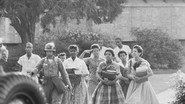
2. Fighting Back, 1957-1962
28 Jan '87States' rights loyalists and federal authorities collide in the 1957 battle to integrate Little Rock's Central High School, and again in James Meredith's 1962 challenge to segregation at the University of Mississippi. Both times, a Southern governor squares off with a U.S. president, violence erupts -- and integration is carried out.
-
Eyes on the Prize (1987)
-
3. Ain't Scared of Your Jails, 1960-1961
04 Feb '87Black college students take a leadership role in the civil rights movement as lunch counter sit-ins spread across the South. "Freedom Riders" also try to desegregate interstate buses, but they are brutally attacked as they travel.
-
Eyes on the Prize (1987)
-
4. No Easy Walk 1962-1966
11 Feb '87The civil rights movement discovers the power of mass demonstrations as the Rev. Martin Luther King, Jr. emerges as its most visible leader. Some demonstrations succeed; others fail. But the triumphant March on Washington, D.C., under King's leadership, shows a mounting national support for civil rights. President John F. Kennedy proposes the Civil Rights Act.
-
Eyes on the Prize (1987)
-
5. Mississippi, Is This America, 1962-1964
18 Feb '87Mississippi's grass-roots civil rights movement becomes an American concern when college students travel south to help register black voters and three activists are murdered. The Mississippi Freedom Democratic Party challenges the regular Mississippi delegation at the Democratic Convention in Atlantic City.
-
Eyes on the Prize (1987)
-
6. Bridge to Freedom,1965
25 Feb '87A decade of lessons is applied in the climactic and bloody march from Selma to Montgomery, Alabama. A major victory is won when the federal Voting Rights Bill passes, but civil rights leaders know they have new challenges ahead.
-


