-
-
-
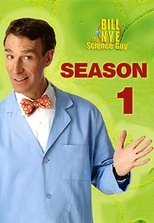
Bill Nye The Science Guy : Season 1
-
Air date: 10 Sep '93 - 20 episodesBill Nye the Science Guy is an educational television program that originally aired from September 10, 1993 to June 20, 1998, hosted by William "Bill" Nye and produced by Buena Vista Television. The show aired on PBS Kids and was also syndicated to local stations. Each of the 100 episodes aims to teach a specific topic in science to a preteen audience. The show is frequently used in schools as an education medium, and it still airs on some PBS stations for this reason. Created by comedian Ross Shafer and based on sketches on KING-TV's sketch program Almost Live!, Bill Nye the Science Guy was produced by Disney Educational Productions and KCTS-TV of Seattle. Bill Nye the Science Guy won nineteen Emmy Awards during its run.
-
.
- Next >
-
-
List of Episodes (20)
-
Bill Nye The Science Guy (1993)

-
1. Flight
10 Sep '93Things that fly need air. Even though we walk through it, breathe it, and sneeze it, air seems to be a whole bunch of nothing. But air is there, and it's powerful. Balloons inflate because air presses on the insides and outsides of the balloon. Air pressure in tires supports the weight of bikes, buses, trucks, cars, and planes. But air doesn't need to be inside something to exert pressure. Air that moves around pushes, too. What do birds, planes, kites, Frisbees, and helicopters have
-
Bill Nye The Science Guy (1993)
-
2. Earth's Crust
17 Sep '93Don't just go with the flow. Settle down on the crust. Imagine a world without any crust. There would be no pies, just goopy filling, no bread, no hamburger buns, and no you or me. That's right. You, and every living thing we know of, live on or in the Earth's crust. And, living things need the Earth's crust to survive. Let's look at the science of the surface. By carefully studying the Earth's surface, scientists have discovered that the Earth is made up of gigantic layers. At the
-
Bill Nye The Science Guy (1993)

-
3. Dinosaurs
24 Sep '93We can dish the real dirt about dinosaurs, thanks to fossils - traces of theses astonishing animals. Dinosaurs did not print newspapers. They did not take family snapshots or videos 65 million years ago. The only proof scientists have of dinosaurs is their fossils, especially bones. They would never have survived billions of years waiting for some human to trip over them. Luckily for paleontologists (scientists who study the past), now and then dinosaurs died, and their bones were
-
Bill Nye The Science Guy (1993)
-
4. Skin
01 Oct '93Learning about skin science is no sweat. It's gigantic. It's gargantuan. It's your skin. It's your body's biggest organ. If you could lay your skin out flat, it would cover about one and a half square meters. Your skin stops you from drying out, protects you from the weather, and keeps bacteria and viruses from getting inside your body. Your skin is also your personal air conditioner and heater all in one. Sweating cools you off. When you're hot, glands in your skin push a mixture of
-
Bill Nye The Science Guy (1993)
-
5. Buoyancy
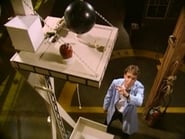
08 Oct '93A hot-air balln ride and a trip to the aquarium help Bill Nye explain why things float
-
Bill Nye The Science Guy (1993)
-
6. Gravity
15 Oct '93Next time you throw a ball in the air, and it doesn't fly off into outer space, thank gravity. Right now, you and everything in the room where you are, is getting pulled down by gravity. If you don't believe it, push a book of your desk. It will go plummeting toward the center of the Earth. It's gravity. The Earth's mass, the stuff it's made of, creates gravity. It's pulling down on you and every other object you can see; it's even pulling down on the air and the ocean. Not only that,
-
Bill Nye The Science Guy (1993)
-
7. Digestion
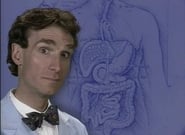
22 Oct '93Take time to digest this show. They say that your food is no more inside you than a pencil is inside a donut, when it's poked through the hole. Instead of the food going in you, food goes through you. But, all the energy you get to live and grow comes from your food. All the chemicals that become your body and brain as you get bigger, come from your food. You get these vital chemicals through a process called ""digestion."" Your body breaks food down and grabs all the nutrients you
-
Bill Nye The Science Guy (1993)
-
8. Phases of Matter
29 Oct '93Bill Nye is going through a phase - a phase of matter. Check out the ""Phases of Matter"" episode to find out about rock-solid solids, liquidy liquids, and gassy gases. It's phase-tastic! Everything around us is made of stuff called matter, and all matter is made of atoms. Matter is anything that comes in three varieties, what scientists call phases. There are solids like rocks, cookies, and desks. There are liquids like water, honey, and juice. And there are gases, we breathe air and
-
Bill Nye The Science Guy (1993)
-
9. Biodiversity
05 Nov '93Ecosystems are areas where things live. Ecosystems that are biodiverse are home to a variety of plants and animals. A healthy ecosystem is one with a lot of biodiversity. Imagine if humans could only eat one kind of food, say corn. We'd be in big trouble if all the corn disappeared. Besides not having anything to munch on at the movies, we'd have nothing to eat at all. Luckily, our ecosystem covers a big part of the Earth, and there are lots of different plants to eat. Ecosystems are
-
Bill Nye The Science Guy (1993)

-
10. Simple Machines
12 Nov '93Learning about science can be hard work, but simple machines can make it easier. Let Bill Nye push and pull you around ramps, levers, screws, and pulleys. Simple machines simply make work easier by directing forces over distances. Instead of lifting a heavy box upstairs, you can hook it to some ropes and pulleys and pull it up. Or you can get a ramp and slide it upstairs. Either way, it's less sweat to use the pulleys or the ramp than it is to lift the box straight up by yourself
-
Bill Nye The Science Guy (1993)
-
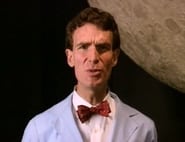
11. The Moon
19 Nov '93Let the moon master Bill Nye teach you the ancient and not-so-ancient secrets of the Moon. Wax on, wax off. The Moon grows bigger (waxes) and smaller (wanes) every 30 days or so. The word ""month"" comes from the word ""moon"". The Moon is the closest thing in space to Earth, and it's one of the most well-studied orbs in our solar system. We know that Moon rocks are rich in calcium and aluminum, that the Moon has no atmosphere, and that there are over a million craters on the Moon's
-
Bill Nye The Science Guy (1993)

-
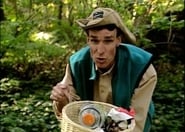
12. Sound
26 Nov '93Listen up, scientists. Bill Nye is here to make some noise in the ""Sound"" episode. Your vocal cords do it. Speakers playing rock music do it. Even a school bell does it. They all vibrate; and that's how sound is made. Plucking a stretched rubber band makes the rubber band vibrate. Air molecules around the rubber band move, pushing other air molecules. As the rubber band continues to vibrate, it sends waves of sound through the air. It's a lot like the ripples you see when you drop a
-
Bill Nye The Science Guy (1993)
-
13. Garbage
03 Dec '93Garbage is a look at two different kinds of garbage -- biodegradable and non-biodegradable. Nye emphasizes the importance of recycling and cutting down on the amount of the waste that cannot break down. The music video "Recycle" has a familiar melody, taken from "Respect," the Aretha Franklin hit.
-
Bill Nye The Science Guy (1993)

-
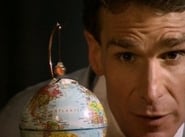
14. Structures
10 Dec '93Are you tense? Need some structure to your life? Then tune in to Bill Nye the Science Guy as he explains the science of structures. All structures give support or create a shape. You can find structures everywhere. Bridges, buildings, chairs, shoes, plants, spiderwebs, tables, and even your own body are all structures. A structure's shape, size, and what it's made of depend on what the structure does and how strong it needs to be. When structures give support, they either experience a
-
Bill Nye The Science Guy (1993)
-
15. Earth's Seasons
17 Dec '93It doesn't matter if it's spring, summer, winter, or fall - Bill Nye is always in season. Every year, we experience the seasons. Some months have snow and rain, while other months have warmth and sunshine. Temperatures go from cold, to woarm, to cold again – winter, spring, summer, and fall. The cycle of the seasons takes one year, and the Earth takes one year to go around the sun. Coincidence? No way. The Earth's orbit around the Sun is flat, as though our planet were spinning
-
Bill Nye The Science Guy (1993)
-
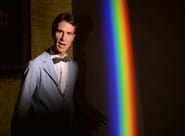
16. Light & Color
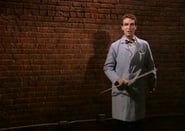
24 Dec '93Lighten up. It's the ""Light and Color"" episode. Without light, we wouldn't be able to see. It would be like living in a room with no windows, doors, or lamps. There's an old saying, ""We don't see things; we see light bouncing off of things."" We see things, and colors, when light bounces off things and into our eyes. White light, like the light from the Sun, is made up of all the different colors of light blended together. When white light hits something white, almost all of the
-
Bill Nye The Science Guy (1993)
-
17. Cells
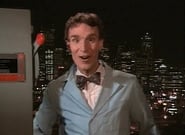
21 Jan '94You can't see them, but they're everywhere even inside Bill Nye. This is not science fiction, it's the science of cells. All things that live are made from cells. You can't see them, but every part of your body, including everything inside your body, is made from cells. Cells eat, they grow, and they make more of themselves (what scientists call replicate). There are millions of different types of cells. Dog cells are different from fish cells. Bird cells are different from your
-
Bill Nye The Science Guy (1993)
-
18. Electricity
28 Jan '94It's time for Bill Nye to shed a little light on electricity. Electricity might seem mysterious, but once you understand the science the light goes on (so to speak). You flip a switch, and the lights turn on. You push the play button, and your personal stereo starts playing music. When you flip the switch or push play, you start a flow of electrons. Electricity is the flow of electrons, and electrons are very tiny charged particles. Electrons are found in atoms, the tiny pieces that
-
Bill Nye The Science Guy (1993)

-
19. Outer Space
04 Feb '94The show is way out there, way far away. After all, it's in Outer Space. When you look at the night sky on a clear dark night, you can see thousands of stars. There are far more than you could count. And, they are way out there. They are very, very far away. It's about the hardest thing to imagine about space. Let's talk about the nearest star to us, the Sun. If somehow outer space were not an icy cold vacuum with nothing to eat, drink, or breathe, and we could drive there in a car, to
-
Bill Nye The Science Guy (1993)
-
20. Eyeball
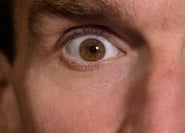
11 Feb '94Look no further ... Bill Nye is on the ball - the eyeball. For their small size, your eyes do an important job. By working with your brain, your eyes can tell the difference between thousands of different colors. They can follow a fast-moving hockey puck across the ice. They are even sending messages to your brain about what you're reading right now. Eyes work a lot like a camera. They take in light, focus light, and make images. With help from the brain, your eyes help understand the
-


